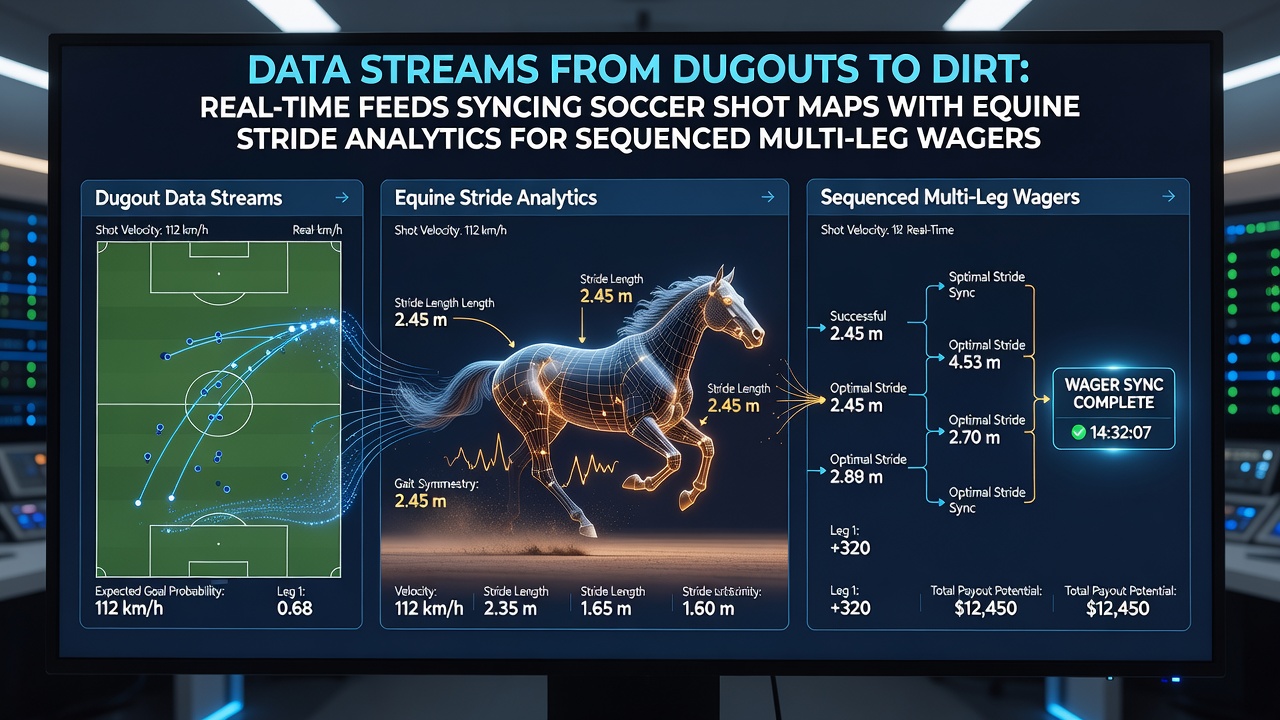
Bridging the Field and the Track: Real-Time Synchronization of Soccer Metrics and Equine Gait Data in Layered Betting Structures
Real-time data integration now connects soccer shot mapping systems with equine stride analytics to support sequenced multi-leg wagers that combine events from both sports. This approach draws on continuous feeds from pitch-side sensors and track monitoring equipment, which transmit location data, velocity readings, and biomechanical measurements into unified platforms for accumulator construction.
Operators process these streams through application programming interfaces that align timestamps across soccer matches and horse races occurring in sequence. Shot maps from European leagues provide xG values and spatial distribution patterns while stride length, frequency, and acceleration metrics from dirt ovals feed into pace projection models. The combined datasets allow bettors to sequence legs where early soccer outcomes influence later horse racing selections within the same ticket.
Data Capture Technologies in Both Sports
Soccer venues deploy optical tracking cameras and wearable devices that generate shot location coordinates at sub-second intervals. These feeds update expected goal calculations and defensive positioning heatmaps throughout each match. On the racing side, high-speed cameras and inertial measurement units attached to saddles record stride parameters over every furlong. Data aggregation services merge these inputs into single dashboards that display cross-sport correlations such as fatigue indicators from soccer players and recovery patterns in equine athletes.
June 2026 brought expanded sensor deployment at several major tracks and stadiums, increasing the resolution of stride analytics and shot trajectory data. Industry reports indicate that transmission latency dropped below 800 milliseconds for most integrated feeds during that period, enabling tighter sequencing windows for multi-leg products.
Platform Architecture for Sequenced Wagers
Betting platforms route incoming streams through middleware layers that normalize units and apply time synchronization protocols. A soccer match starting at 15:00 can link directly to a subsequent race card at 17:30 when algorithms detect overlapping performance variables such as player workload and horse freshness. Users construct accumulators by selecting metrics from the synchronized interface rather than switching between separate soccer and racing terminals.
Studies from the University of Melbourne's Centre for Sports Analytics show that integrated data environments reduce manual cross-referencing time by approximately 40 percent compared with siloed systems. The same research notes improved accuracy in pace-adjusted shot value models when stride recovery data informs fatigue estimates for teams playing short rest schedules.
Case Examples of Cross-Sport Sequencing
One documented workflow involves selecting a Premier League fixture with high expected shot volume in the first half, then routing proceeds into a later dirt sprint where equine stride analytics indicate superior early acceleration. The platform flags correlations between team pressing intensity and subsequent race pace figures, allowing the wager structure to account for momentum carryover across the two events.
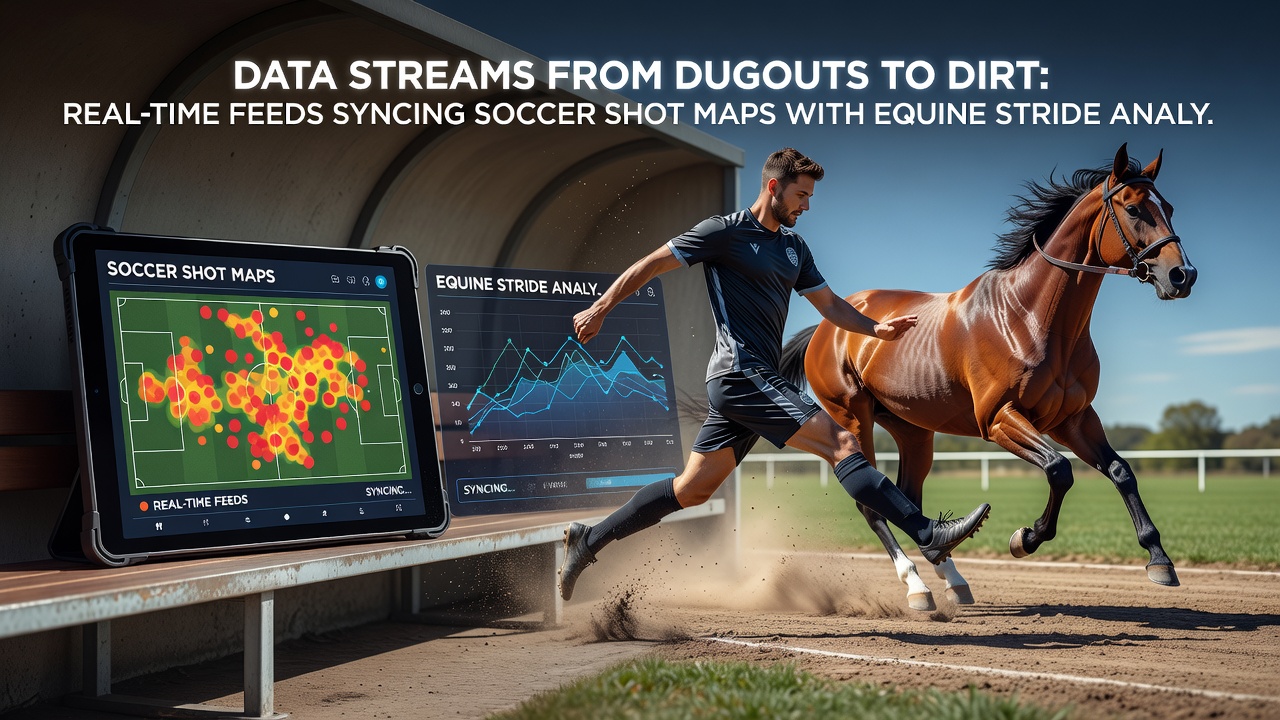
Another sequence pairs late-evening European cup matches with overnight Australian turf racing. Real-time stride degradation curves from the horses adjust the weighting applied to soccer stoppage-time shot probabilities, producing updated odds for the final leg of the accumulator. Observers note that these adjustments appear most frequently in wagers spanning more than four hours between the first and last event.
Regulatory and Integrity Considerations
Authorities in multiple jurisdictions require audit trails for any data feed used in wagering products. The Australian Communications and Media Authority maintains guidelines on latency standards and data provenance that apply to cross-sport analytics platforms. Similar frameworks from Canadian provincial regulators emphasize verification of stride measurement devices and camera calibration records before feeds enter commercial betting systems.
Industry groups such as the International Betting Integrity Association have published technical standards for timestamp alignment and anomaly detection in combined soccer and racing datasets. These standards address risks of delayed or manipulated streams that could distort accumulator pricing across sequenced legs.
Future Developments in Feed Integration
Equipment manufacturers continue to refine sensor fusion techniques that merge optical soccer data with inertial horse measurements under a common coordinate system. Research teams at several European universities are testing graph-based models that treat shot locations and stride cycles as nodes within a single temporal network. Early results suggest these models can identify previously undetected cross-sport performance linkages useful for multi-leg wager construction.
Transmission infrastructure upgrades planned for 2027 aim to further compress end-to-end latency while expanding coverage to additional lower-tier leagues and regional racing circuits. The resulting datasets should support even longer sequencing chains that span multiple time zones without loss of synchronization accuracy.
Conclusion
Integration of soccer shot maps and equine stride analytics through real-time feeds has created new structures for sequenced multi-leg wagers. Technical advances in data capture, synchronization protocols, and regulatory oversight continue to shape how these combined analytics reach betting platforms. As sensor networks expand and processing speeds increase, the scope of cross-sport accumulator products is expected to grow in both complexity and geographic reach.