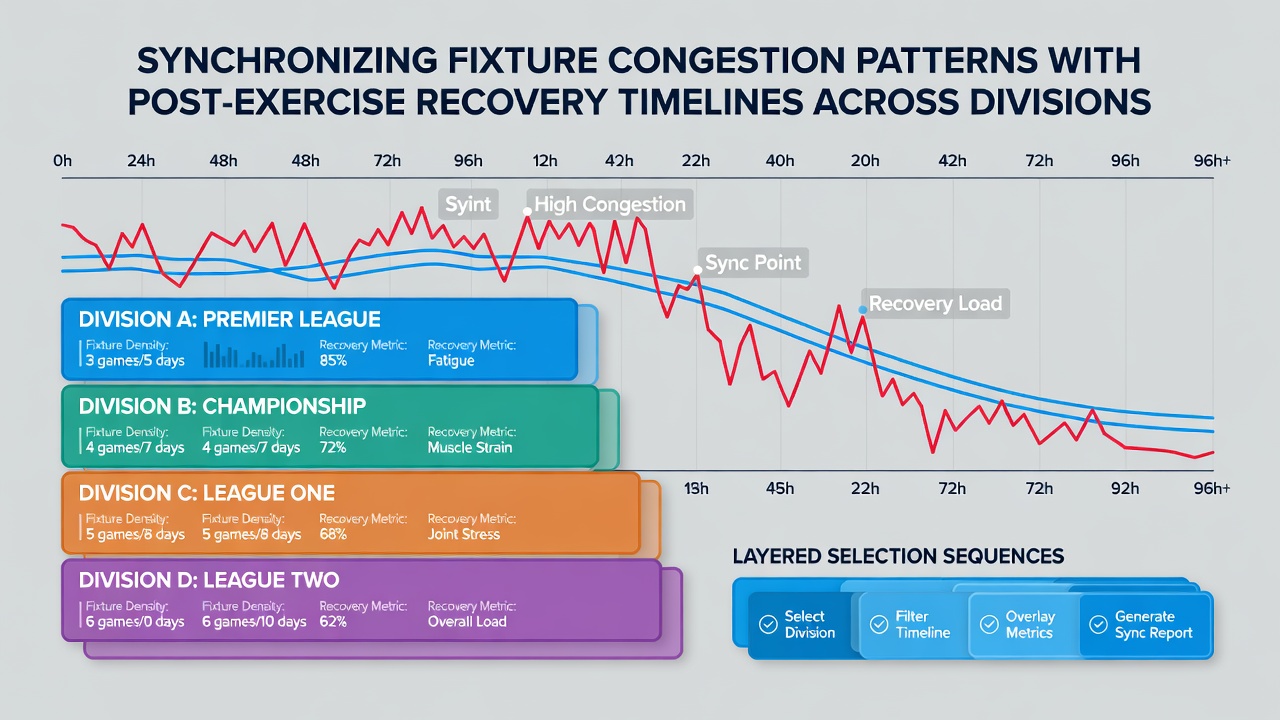
Coordinating Schedule Density With Healing Cycles Across Leagues and Flat Meetings
Fixture congestion appears in multiple European soccer divisions during winter and spring blocks, while flat racing cards stack meetings across Britain, Ireland, and continental tracks throughout the summer. Researchers track how these dense periods interact with documented recovery windows for players and thoroughbreds, then feed the patterns into layered selection sequences used by accumulator builders. Data from sports science departments at several universities shows that muscle repair cycles for elite athletes average 72 to 96 hours after high-intensity efforts, yet congested calendars often compress that interval.
Division-Level Patterns in Soccer
Premier League sides face up to three matches inside eight days during December, whereas Championship and League One clubs sometimes encounter four fixtures across the same span because of additional cup ties. Performance databases maintained by Opta and similar providers record measurable drops in distance covered and pass completion rates when recovery falls below 60 hours. Lower-division teams exhibit steeper declines because squad depth remains thinner, so rotation options shrink. Observers note that European competition schedules add further pressure on clubs that advance in midweek ties, creating staggered congestion across domestic divisions.
Flat Racing Calendar Pressures
Flat meetings cluster around major festivals, with trainers often running the same horses on consecutive weekends when prize money justifies the risk. Studies from veterinary faculties in Australia and the United States indicate that equine soft-tissue recovery requires a minimum of five to seven days after races exceeding 1400 metres. When cards bunch at tracks such as Newmarket, Ascot, or Chantilly, shorter intervals appear more frequently. Handlers adjust workloads by monitoring heart-rate variability and blood lactate markers, yet the published figures still reveal elevated injury incidence during peak summer blocks.
Linking Recovery Timelines to Layered Selections
Accumulator constructors combine soccer and racing legs by cross-referencing fixture lists against published recovery benchmarks. One common approach places selections from less congested divisions alongside horses whose last starts occurred at least six days earlier. Figures released by the British Horseracing Authority and parallel bodies in France show that runners with adequate spacing post a higher win rate in subsequent outings. Parallel soccer data from German Bundesliga and Serie A archives indicate similar trends when squads receive extended rest. Those constructing multi-leg bets therefore filter candidates by matching actual rest periods to the established physiological windows rather than relying solely on recent form.
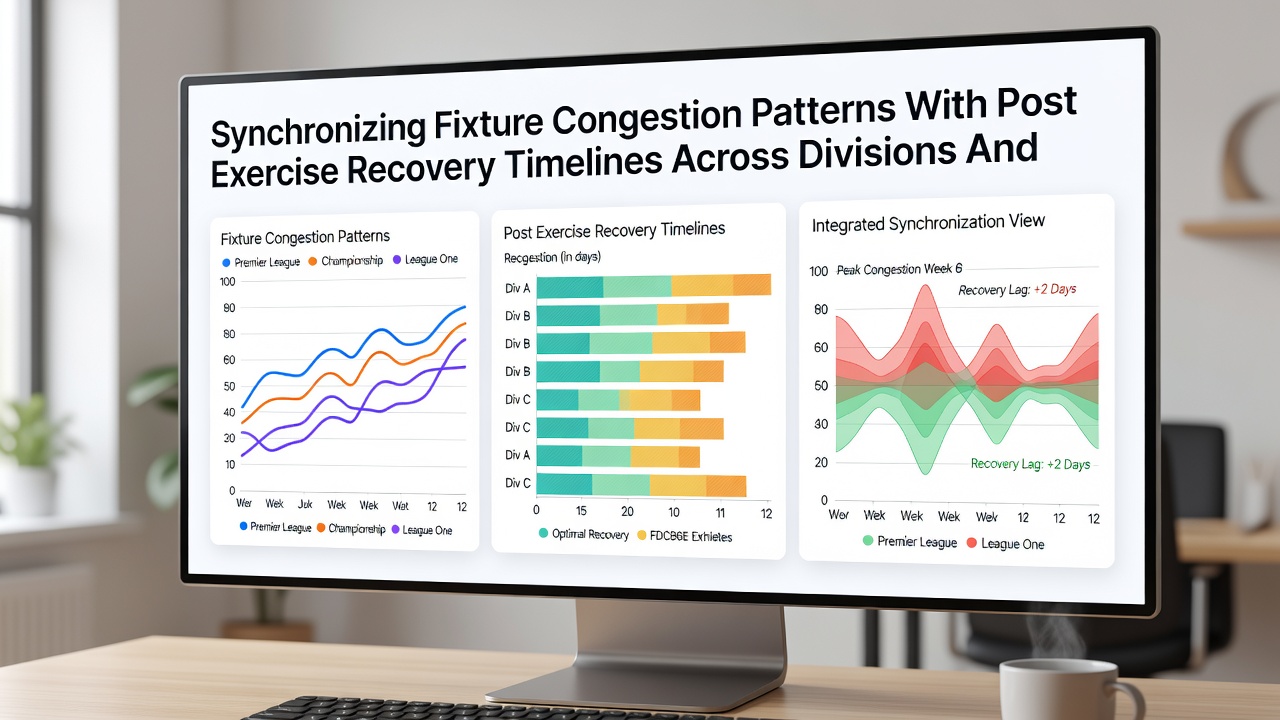
July 2026 Scheduling Snapshot
July 2026 features a compressed international window that overlaps with several major flat festivals in both hemispheres. Pre-season friendlies and early domestic cups in lower European divisions coincide with the start of the Australian winter racing carnival, creating simultaneous congestion spikes. Records from past overlapping periods demonstrate that sides and stables operating across these calendars experience measurable performance variance when rest intervals shorten. Layered selection models therefore incorporate these calendar intersections by weighting legs according to documented recovery compliance rather than blanket recent-form metrics.
Practical Application in Accumulator Construction
Builders examine published squad lists and trainer declarations for explicit rest indicators. When a Premier League side plays midweek in Europe while a League Two opponent enjoys a full week, the model assigns different confidence weights to each leg. The same principle applies to horses entered at York or Deauville after a six-day turnaround versus those returning after ten days. Industry reports from the European Racing Association and North American Jockey Club databases confirm that these spacing differentials correlate with outcome probabilities across large sample sizes. The resulting sequences therefore integrate both sports by aligning fixture density maps with verified physiological recovery timelines.
Conclusion
Coordinating schedule density with documented healing cycles supplies a measurable framework for layered accumulator sequences that span soccer divisions and flat racing cards. Published performance records and veterinary timelines continue to guide how selections are filtered and weighted. As calendars evolve through 2026 and beyond, those constructing multi-leg bets maintain the practice of matching actual rest intervals against established recovery benchmarks across both codes.