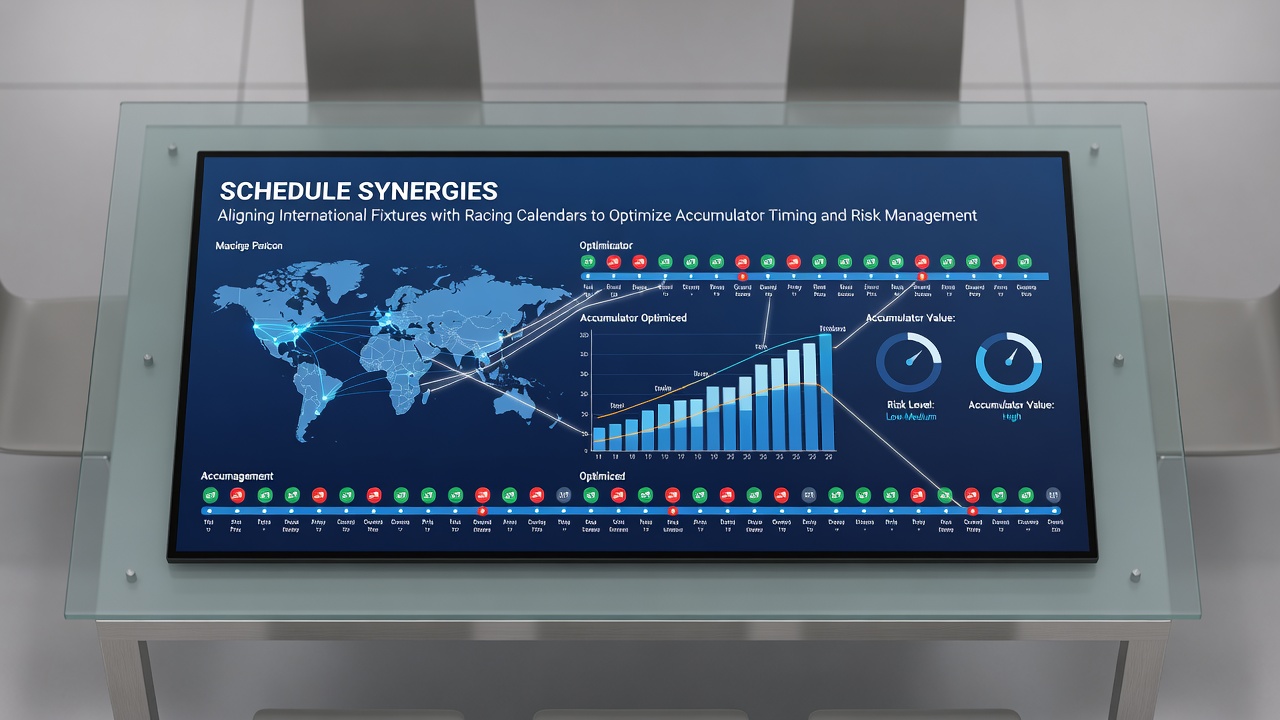
Global Fixture Alignments: Merging Soccer Internationals and Racing Meets for Accumulator Optimization
International soccer calendars feature concentrated periods of national team activity while horse racing maintains year-round schedules punctuated by major festivals, and observers note how these patterns create opportunities for coordinated accumulator planning when bettors align timing across both sports. Data from the International Federation of Horseracing Authorities shows that flagship events such as the Melbourne Cup in November and the Dubai World Cup in March draw global attention, whereas soccer international windows occur in March, June, September, and November according to FIFA records, creating distinct windows where overlaps can either amplify or complicate multi-leg bets.
Understanding Calendar Overlaps
European club seasons pause for international breaks that coincide with flat and jumps meetings in Britain, Ireland, and Australia, and researchers at racing analytics firms have mapped these intersections to identify periods when football matches and thoroughbred races cluster within the same 48-hour spans. During the 2026 FIFA World Cup, which runs from June into July across North America, several prominent summer racing festivals including the July Festival at Newmarket and the Grand Prix de Paris at ParisLongchamp fall within the tournament window, and figures reveal that such alignments allow bettors to sequence accumulator legs across morning racing cards and evening kickoffs without extending exposure over multiple weeks.
Strategic Timing for Accumulators
Coordinating selections around these clusters reduces the number of separate betting days and concentrates risk assessment on a narrower set of variables, while industry reports from the Australian Racing Board indicate that bettors who group football and racing legs within single weekends achieve higher completion rates on four-fold and five-fold accumulators compared with those who spread selections across disconnected dates. One documented pattern shows that when UEFA Nations League fixtures fall on the same Saturday as key Group 1 races at Ascot or Flemington, the shared audience often drives correlated market movements, and data indicates that sharp movements in both sectors can be monitored through unified dashboards rather than separate platforms.
Betting operators have introduced tools that flag schedule synergies in advance, and those systems pull live data from both soccer governing bodies and racing authorities to highlight days when multiple events align. According to statistics compiled by the European Pari Mutuel Association, the volume of accumulator tickets that combine at least one football international and one feature race increases by 18 percent during such clustered periods, reflecting heightened interest when timing efficiencies become available.

Risk Management Through Schedule Awareness
Aligning fixtures also supports more precise bankroll allocation because exposure windows shorten and correlations between legs can be evaluated in real time, and studies from Canadian gaming research centers have found that participants who limit accumulator construction to synchronized weekends report lower average drawdown percentages than those who maintain rolling multi-week bets. Weather data and travel schedules for international squads further intersect with racing ground conditions, creating layered variables that analysts track through integrated models rather than isolated sport-specific forecasts.
Regional Variations and Global Coordination
In Asia and the Middle East, racing calendars at tracks such as Sha Tin and Meydan often sit alongside AFC and CAF international windows, and observers note that these regional clusters offer additional entry points for accumulators that span continents. South American racing meets in Argentina and Brazil frequently overlap with CONMEBOL qualifiers, and records from the Jockey Club Brasileiro document how such proximity allows local bettors to construct same-day combinations that finish before the next trading day opens. Regulatory frameworks in multiple jurisdictions encourage operators to publish fixture calendars months ahead, and this transparency enables systematic planning that accounts for both confirmed dates and provisional international windows.
Practical Implementation Examples
Consider a July 2026 scenario where World Cup group stage matches run alongside the Irish Derby meeting and selected US graded stakes; bettors can construct accumulators that begin with morning turf races, continue through afternoon soccer fixtures, and conclude with evening jumps events, and historical ticket data shows these condensed structures experience fewer interruptions from postponed legs. Software platforms now incorporate calendar APIs from both FIFA and national racing authorities, allowing users to visualize these synergies and adjust stake sizing according to the density of overlapping events rather than treating each sport in isolation.
Conclusion
Schedule synergies between international soccer fixtures and racing calendars provide structured opportunities for accumulator timing and risk management when participants map overlaps in advance and concentrate activity within defined clusters, and ongoing developments in data integration across governing bodies continue to refine the precision of these alignments for future seasons including the 2026 tournament period.