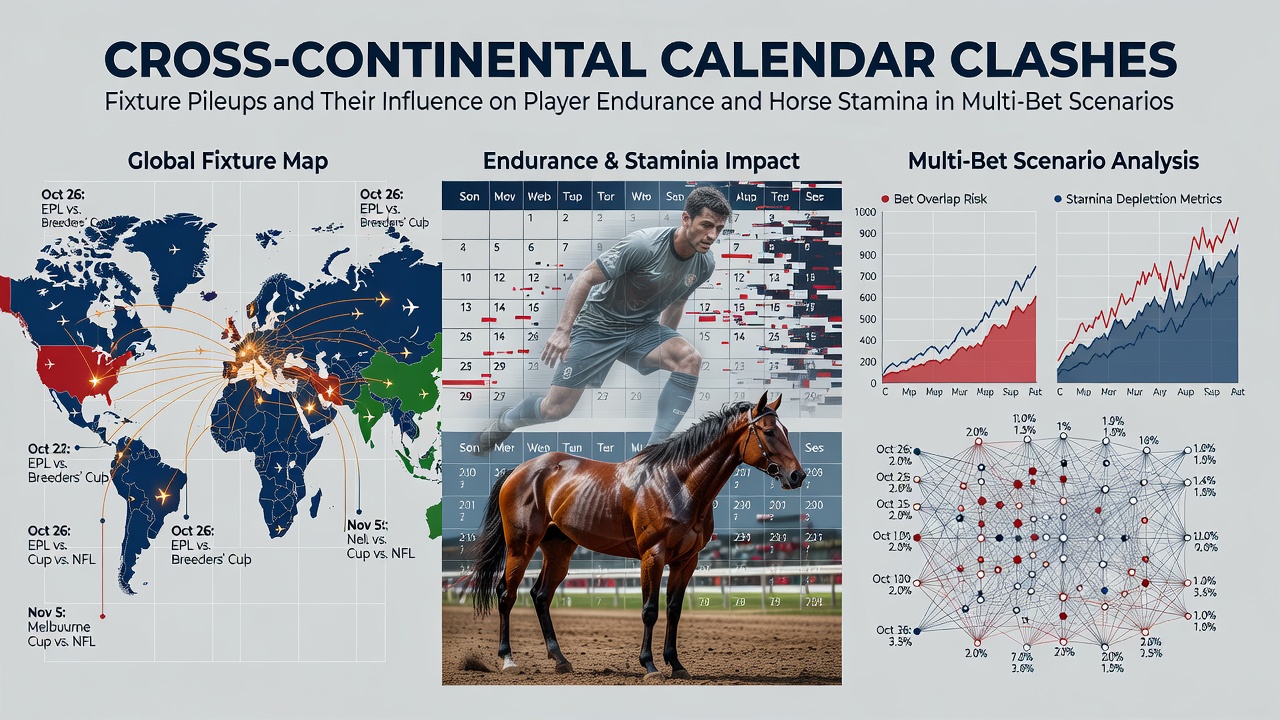
Global Fixture Overlaps: Calendar Pressures on Athlete and Equine Performance in International Accumulator Markets
Fixture pileups emerge when international calendars force clubs and racing stables into back-to-back commitments across multiple continents, and researchers tracking workload data note measurable drops in both human recovery markers and equine stride efficiency during these periods. European soccer leagues often extend their domestic schedules into May while South American and Asian competitions begin pre-season tours, creating narrow windows that leave little room for rest between long-haul travel and competitive matches.
Football Workload Patterns Across Borders
Studies compiled by sports medicine teams at universities in Australia and Canada show that players completing more than four flights exceeding eight hours within a three-week window experience elevated creatine kinase levels, a direct indicator of muscle damage, compared with those whose schedules remain within one continent. The 2026 FIFA World Cup, scheduled to open on 11 June across venues in the United States, Canada, and Mexico, compresses the usual off-season for many European-based athletes who also represent national teams in final qualifiers during March and late May, leaving club seasons to finish under accelerated conditions.
Coaches in the English Premier League and Bundesliga have responded by rotating squads more aggressively in April and May, yet data from match-tracking systems indicate that teams with four or more players involved in intercontinental travel still post higher rates of soft-tissue injuries in the subsequent two weeks. These patterns matter for multi-bet strategies because accumulators built on late-season European fixtures increasingly incorporate players whose physical readiness has been shaped by earlier cross-border obligations.
Horse Racing Stamina Under Similar Strain
Thoroughbred programs face parallel pressures when major meetings in Europe, Australia, and North America fall within days of one another. The Melbourne Cup carnival in early November and the Breeders' Cup in the United States create short turnaround times for horses shipped between hemispheres, and veterinary records kept by the International Federation of Horseracing Authorities document longer recovery intervals for animals that cross the equator twice within sixty days. June 2026 brings additional complexity because several North American tracks have scheduled graded stakes immediately before and after World Cup-related public holidays, tightening the calendar for European raiders already committed to Royal Ascot and the Irish Derby.
Handicappers who review sectional timing data report that horses with recent long-haul journeys show reduced closing speeds in the final furlongs when asked to race again within fourteen days, a trend that surfaces in both turf and synthetic surfaces. Trainers mitigate these effects through adjusted training loads and monitored travel crates, yet the physiological cost remains visible in post-race bloodwork and heart-rate recovery curves.
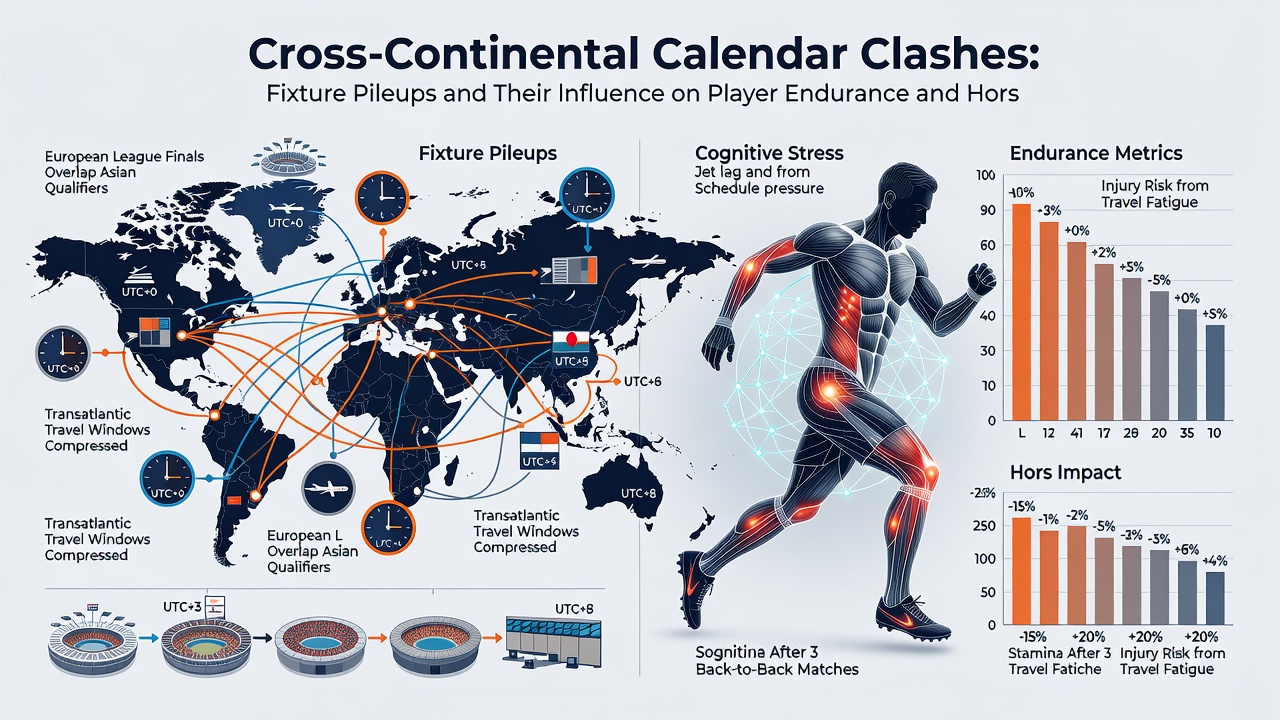
Combined Effects on Multi-Bet Decision Frameworks
Betting platforms that aggregate odds across soccer leagues and horse racing meetings must account for these endurance variables because fixture density influences both team selection and individual equine performance. Research groups at the University of Guelph in Canada and the Racing Science Centre in New Zealand have published joint papers linking travel frequency to performance variance, and their datasets show wider margins of error in predicted outcomes when more than three intercontinental movements occur inside a single calendar month. Accumulator constructors who layer late-May European matches with early-June North American turf races therefore incorporate these margins by adjusting stake sizing or by favoring selections with documented rest advantages.
League schedulers in South America have already signaled that their 2026 domestic calendars will pause during the World Cup window, yet many clubs still face Copa Libertadores quarter-final ties that straddle the tournament dates, adding another layer of fixture density for players who return to club duty immediately afterward. Observers tracking these overlaps note that teams with deeper squads and established recovery protocols maintain more consistent results, information that surfaces in pre-match statistics and historical head-to-head records.
Monitoring Tools and Data Sources
Performance analysts now cross-reference GPS workload figures from soccer clubs with GPS-equivalent stride analytics from racing jurisdictions, creating unified dashboards that flag elevated risk periods. European governing bodies and Australian state racing authorities exchange anonymized datasets under formal agreements, allowing researchers to compare recovery timelines across codes. These shared resources help identify when a squad or stable has entered a high-density stretch, giving those who build accumulators clearer signals about which selections carry hidden fatigue variables.
Conclusion
Cross-continental calendar clashes continue to shape both athletic output and equine durability, and the 2026 schedule intensifies those pressures through overlapping international tournaments and graded racing festivals. Objective performance records and veterinary metrics supply the factual basis for understanding how these pileups translate into measurable changes on the pitch and the track, information that remains central to any multi-bet framework operating across multiple continents.