When Recovery Meets Declarations: Layered Models Drive Selections in Football and Horse Racing
Layered selection frameworks combine player recovery data with official trainer declarations to build accumulator structures across football leagues and horse racing meetings, and these systems process timelines in stages that filter candidates based on verified fitness windows alongside declared intentions. Research from the Australian Institute of Sport shows structured recovery protocols shorten return-to-play periods by measurable margins when integrated with competition schedules, while similar patterns appear in equine programs where veterinary and trainer updates dictate entry viability.
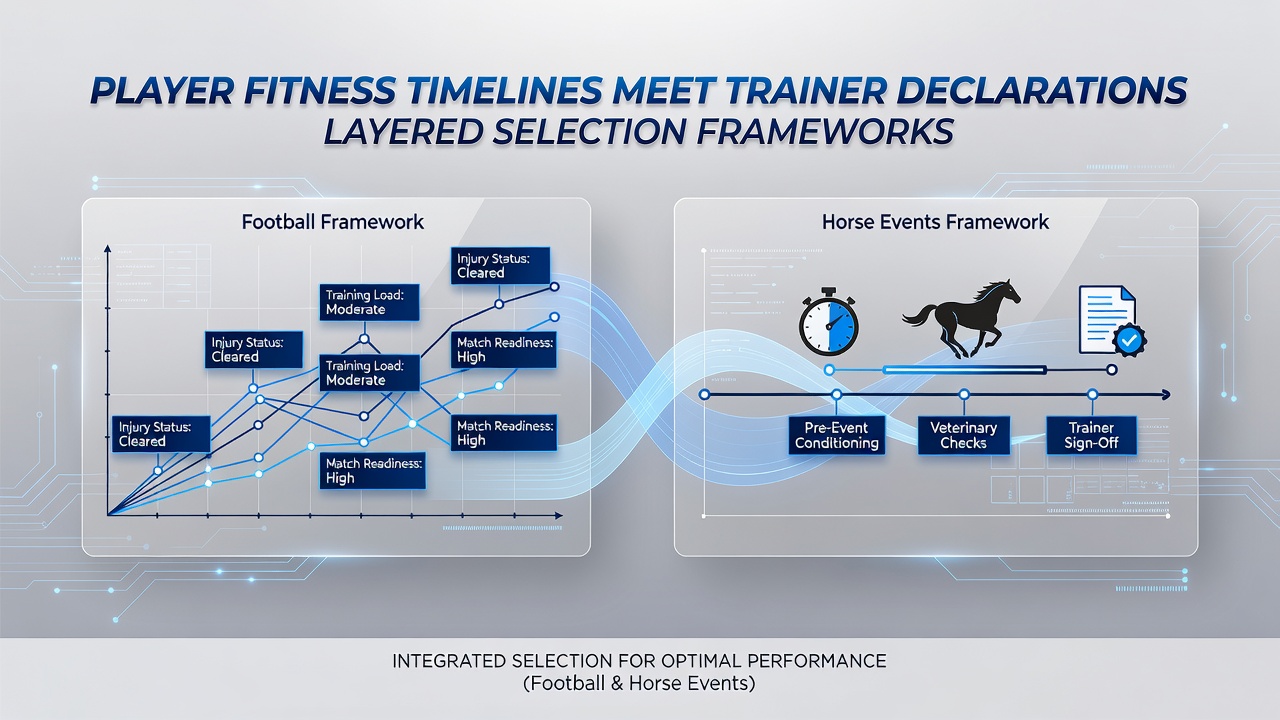
Football frameworks typically track injury timelines through phased assessments that start with initial diagnosis and move through monitored training loads toward full match readiness, and these stages feed directly into selection layers that prioritize players whose projected availability aligns with fixture demands. Horse racing equivalents rely on trainer declarations filed at set deadlines before each meeting, which confirm participation status and reveal any last-minute adjustments tied to recent workouts or health checks.
Football Recovery Timelines in Multi-Layer Filters
Clubs publish regular medical updates that feed external selection models, and analysts map these against historical recovery curves to estimate participation probability across upcoming matchdays. Data from European club competitions indicate that players returning from hamstring strains follow predictable 4-to-6-week arcs when rehabilitation follows evidence-based loading programs, whereas more complex knee recoveries extend further and require additional monitoring layers before inclusion in accumulator shortlists. Layered frameworks assign weighted scores to each recovery stage, so early-phase athletes drop out of consideration while those nearing full training integration rise in priority rankings.
July 2026 pre-season windows introduce fresh variables as squads rebuild after international tournaments, and fitness reports issued during this period often determine which players enter early-season accumulator pools. Observers note that clubs adopting integrated tracking systems release more granular updates, allowing selection layers to adjust probabilities before official squad announcements.
Trainer Declarations and Equine Selection Layers
Declarations in horse racing function as binding statements that lock runners into specific races, and they arrive at fixed cut-off times set by racing authorities in each jurisdiction. These filings incorporate trainer assessments of recent gallops, ground preferences, and any recovery from prior exertions, which layered models then cross-reference against pace figures and distance suitability. Frameworks sort declarations into tiers based on confirmation strength, so runners with consistent trainer backing advance while those flagged for potential withdrawal receive lower weighting in accumulator construction.
Regional differences shape declaration practices, with Australian and North American tracks often requiring earlier filings than European fixtures, yet all systems generate data streams that selection algorithms process in sequence. Studies conducted by the International Federation of Horseracing Authorities highlight how declaration patterns correlate with strike rates when trainers maintain transparent reporting across multiple meetings.

Intersection Points Within Layered Architectures
The convergence occurs when football player availability windows overlap with horse declaration deadlines inside shared accumulator timelines, and frameworks apply sequential filters that first validate fitness status before confirming declared participation. Analysts construct these architectures by stacking layers that eliminate candidates failing either criterion, which narrows the pool to combinations where both elements align. One documented case involved a mid-July 2026 European football weekend paired with an Australian winter racing card, where recovery projections for key midfielders matched trainer confirmations for pace-oriented runners and produced viable multi-leg structures.
External data sources enhance accuracy at these intersection points, and reports from Sport Canada outline how standardized fitness metrics improve cross-sport prediction models when applied consistently. Selection layers incorporate such benchmarks to recalibrate probabilities as new declarations and medical bulletins arrive.
Practical Application in Accumulator Construction
Tipster operations process these combined inputs through automated pipelines that rank potential legs according to alignment scores, and manual review then refines the final accumulator paths. July 2026 schedules feature clustered fixtures across continents that test framework responsiveness, particularly when late fitness upgrades or trainer revisions occur close to deadlines. Frameworks handle these revisions by re-running filters rather than discarding entire structures, which preserves continuity while updating probability estimates.
Geographic spread adds complexity because football seasons in South America run counter to Northern Hemisphere calendars, yet layered models accommodate this by maintaining parallel tracking for each region. Horse racing circuits similarly span hemispheres, so declaration timelines from one zone often inform selections in another when accumulators span multiple days.
Conclusion
Layered selection frameworks that merge recovery timelines with trainer declarations continue to evolve as data sources expand and reporting standards tighten across both sports. These systems deliver structured outputs that support accumulator planning by reducing uncertainty around availability and participation, and ongoing refinements in July 2026 reflect wider adoption of integrated tracking tools. Observers track performance metrics from these frameworks to assess consistency, while regulatory bodies in multiple regions monitor declaration integrity to maintain transparency. The result is a growing body of selection architectures built on verifiable inputs rather than isolated assessments.