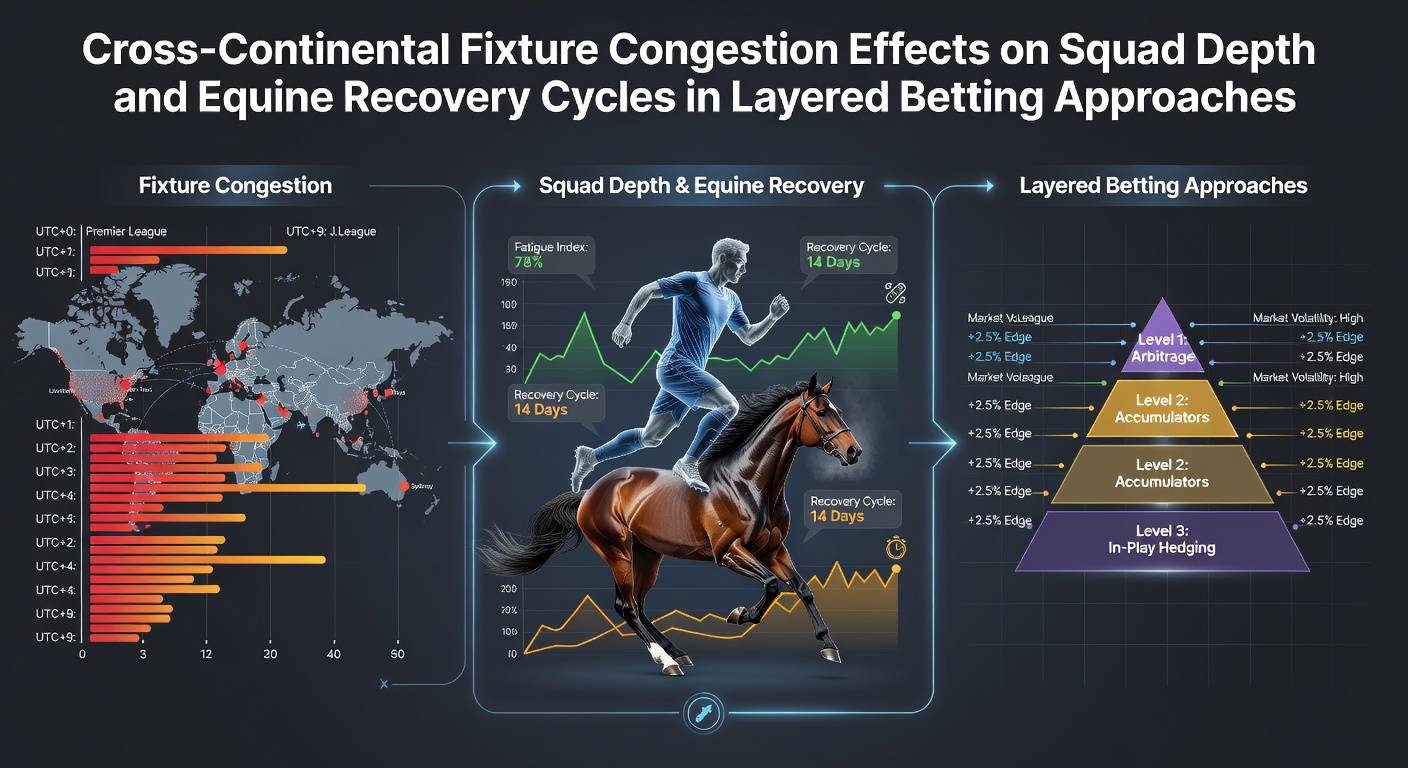
Worldwide Fixture Crunches: How Cross-Continent Travel Affects Player Pools and Equine Downtime in Accumulator Strategies
Fixture congestion across multiple continents creates measurable strain on football squads and thoroughbred recovery periods, which in turn shapes outcomes within layered betting frameworks that combine soccer and racing selections. Data from international sports governing bodies shows that teams competing in both domestic leagues and intercontinental tournaments often face compressed schedules, leading to reduced rotation options and increased injury rates among key personnel.
Football Squad Depth Under Global Pressure
European clubs participating in the expanded FIFA Club World Cup format, which continues into June 2026 with matches scheduled across North America, encounter extended travel demands that limit training time and recovery windows between games. Researchers at the University of Toronto documented how transatlantic flights followed by immediate matchdays correlate with elevated fatigue markers in players, particularly those in midfield positions who log the highest minutes. Squad depth becomes a critical variable here because managers must balance starting lineups across league, cup, and continental fixtures without adequate rest cycles for all roster members.
Observers note that lower-league reinforcements often step into starting roles during these periods, yet performance consistency drops when these athletes lack prior exposure to high-intensity schedules. This pattern repeats in South American domestic leagues where Copa Libertadores participants juggle cross-border trips with national championship rounds, resulting in documented drops in expected goals metrics according to analytics platforms tracking CONMEBOL competitions.
Equine Recovery Cycles in Racing Calendars
Thoroughbreds racing on circuits that span Europe, Asia, and Australia face analogous pressures from rapid relocation and back-to-back events. Studies conducted by the Australian Racing Board highlight that horses completing international flights require extended rest intervals before returning to peak performance levels, with recovery timelines stretching beyond standard 21-day windows when jet lag compounds physical exertion from races. Trainers managing dual-hemisphere campaigns must therefore adjust preparation schedules, which affects availability for major stakes events that frequently appear in multi-leg accumulator structures.
One documented case involved a Melbourne Cup contender that traveled from Europe for a preparatory run in Hong Kong before returning south, where post-flight bloodwork revealed delayed muscle enzyme normalization compared to domestically based runners. Such cycles influence betting layers that pair football selections with each-way horse wagers, since equine freshness directly correlates with finishing positions in tightly contested fields.
Integrated Effects on Layered Betting Models
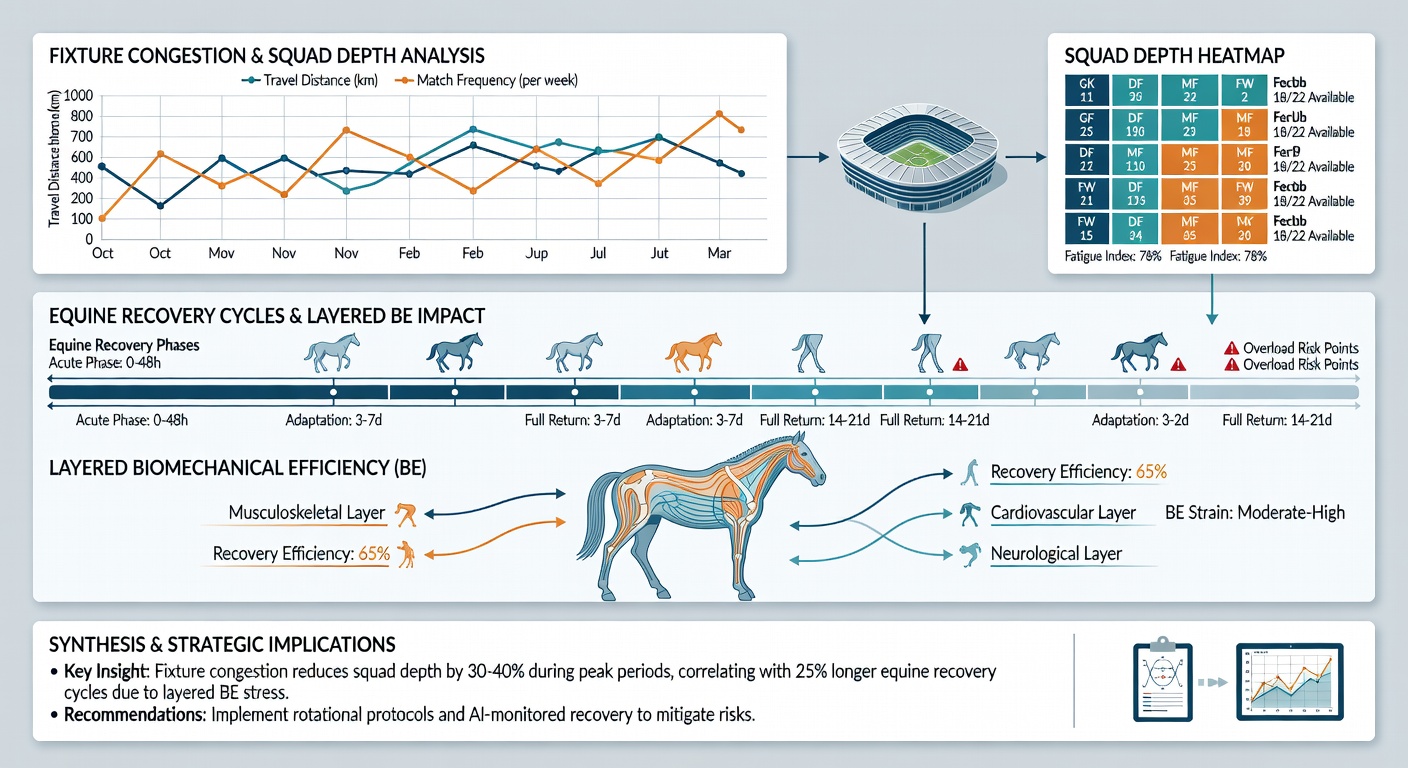
Layered betting approaches that stack soccer accumulators alongside racing doubles encounter compounded variables when congestion peaks. Evidence from the International Federation of Horseracing Authorities indicates that equine performance variance increases during summer months when global calendars overlap, mirroring patterns seen in football where midweek European ties precede weekend domestic matches. Bettors tracking these overlaps often reference squad rotation announcements and veterinary reports to adjust stake allocations across combined markets.
What's interesting is how data integration across sports reveals correlations: periods of elevated player workload in the English Premier League coincide with reduced win rates for certain favorites in subsequent racing fixtures held on the same weekend. Analysts at research institutions in Canada have modeled these intersections, showing that depth charts thinned by international duty calls create predictable dips in team totals that propagate into accumulator payout probabilities.
June 2026 Scheduling Overlaps
As June 2026 approaches, the alignment of the FIFA World Cup qualifiers in South America with northern hemisphere racing festivals creates fresh test cases for these dynamics. Clubs releasing players for continental duty must then navigate domestic fixture backlogs, while racing stables prepare horses for events that follow closely after long-haul transport. These overlapping demands underscore the value of monitoring official rotation policies and veterinary clearance records when constructing multi-sport selections.
Conclusion
Cross-continental fixture demands continue to reshape available resources in both football and horse racing, producing measurable shifts in squad utilization and equine readiness that feed directly into accumulator construction processes. Ongoing data collection from regulatory and research entities across regions supports continued observation of these patterns as calendars evolve.